


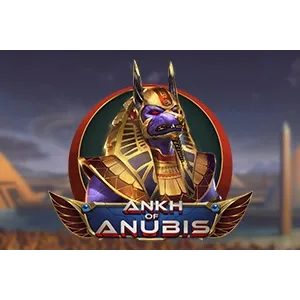
 ▶ Play Demo
Legacy of DeadPlay'n GO
84.55%lowestΔ 12.0396.58%best build
plays at 94.51%
Max win5,000×VolatilityHighMechanicExpanding-symbol free spins
WHPlay at William Hill96.58% →Best RTPs for Legacy of Dead✓✓12Slot review

Ankh of Anubis RTP tops out at 96.20%, but five documented builds fall to 84.20% — a 12.00-point spread the operator picks and you can't read from outside. Here's the ladder, what the gap costs, and how the Egyptian ways-game actually pays.

The Play'n GO Ankh of Anubis RTP is a five-build ladder from 96.20% down to 84.20%, and the casino picks which one you play. Our tracking of 23 casinos settles what that means in practice: most run 94.20%, only two run the marketed 96.20%, and the certified 84.20% floor is deployed nowhere we track — while five casinos read a shade higher at 96.32%. So the honest headline is 94.20%, not the 96.20% on the box: a 5.80% house edge rather than 3.80%, worth £2.00 more per £100 wagered. It is a High-volatility, 576-way Egyptian game with a 15,000× maximum, reached through free spins with Anubis Wilds. The one move that matters is confirming the figure in the game's own paytable before you stake — the build cannot be read from the title screen.
This is Play'n GO's 2019 Ankh of Anubis — not Hacksaw Gaming's Hand of Anubis, Pragmatic Play's Fury of Anubis or the 2024 Ankh of Anubis Awakening sequel.
Studios can ship the same game in several documented mathematical configurations and let an operator select one: the artwork, 576-way grid and features remain recognisable, while the theoretical return changes. The Ankh of Anubis slot RTP is therefore a five-step ladder, not one universal percentage.
| Build | RTP | House edge | Casinos running it (our tracking) |
|---|---|---|---|
| Above the top | 96.32% | 3.68% | 5 — a shade above the documented 96.20% top |
| Marketed top | 96.20% | 3.80% | 2 — Roobet and Duel |
| Typical build | 94.20% | 5.80% | 12 — the modal live setting |
| Reduced | 91.20% | 8.80% | 3 |
| Deep reduction | 87.20% | 12.80% | 1 |
| Certified floor | 84.20% | 15.80% | 0 — certified, not deployed |
Play'n GO's own product page doesn't print the ladder, but our casino tracking maps it to real deployments. The 94.20% build is the one you will most often meet — 12 of the 23 casinos we track run it, including LeoVegas, Casumo, Rizk and Wildz. The marketed 96.20% is scarce, live at just two (Roobet and Duel); three casinos run 91.20% and one 87.20%. Five read 96.32%, marginally above the documented top — a quirk we also see on Play'n GO's other Egyptian titles. The 84.20% certified floor sits on the ladder but is deployed at none of the casinos we track, so it is a paper floor for now.
The steps are uneven. The return falls 2.00 points from 96.20% to 94.20%, 3.00 more to 91.20%, 4.00 more to 87.20%, then another 3.00 to 84.20%. Across the full ladder, the house edge rises from 3.80% to 15.80% — more than four times the top-build edge. A two-point configuration change can matter over sustained turnover; a 12.00-point fall changes the economic character of the game.
| Build | RTP | House edge | Tracked casinos |
|---|---|---|---|
| Highest tracked | 96.32% | 3.68% | 5 |
| Marketed top | 96.20% | 3.80% | 2 |
| Typical | 94.20% | 5.80% | 12 |
| Reduced | 91.20% | 8.80% | 3 |
| Deep | 87.20% | 12.80% | 1 |
| Certified floor | 84.20% | 15.80% | 0 |
A demo, a lobby tile and the game's name cannot expose the selected configuration. Open the information or paytable panel in the client that will take the stake and confirm whether it shows 96.20%, 94.20%, 91.20%, 87.20% or 84.20%. That screen is the only source tied directly to the active build and cannot be replaced by an external assumption.
A spread only means something once it is money. See how much more the reduced build takes, for your chosen number of spins and bet amount.
The value shown reflects the theoretical variance in expected returns when comparing the highest RTP setting to the lowest RTP setting for the chosen number of spins. This is an illustrative calculation only. It does not predict or guarantee actual results, and outcomes may differ from the theoretical RTP. All values refer to your game balance.
Of every £5,000 you wager, here's where it goes on each build.
Each bar is the full amount wagered: green stays with you, grey is the house's cut you'd pay on either build, and red is the extra the reduced build takes.
Expected cost is turnover multiplied by the house edge. The table compares the 3.80% edge at 96.20% with the 15.80% edge at 84.20%, using representative GB stakes. It does not assume that every session loses exactly this amount.
| Stake | Spins | Total wagered | Cost at 96.20% | Cost at 84.20% | Difference |
|---|---|---|---|---|---|
| £0.20 | 500 | £100 | £3.80 | £15.80 | £12.00 |
| £0.20 | 2,000 | £400 | £15.20 | £63.20 | £48.00 |
| £0.20 | 5,000 | £1,000 | £38.00 | £158.00 | £120.00 |
| £1.00 | 500 | £500 | £19.00 | £79.00 | £60.00 |
| £1.00 | 2,000 | £2,000 | £76.00 | £316.00 | £240.00 |
| £1.00 | 5,000 | £5,000 | £190.00 | £790.00 | £600.00 |
| £2.00 | 500 | £1,000 | £38.00 | £158.00 | £120.00 |
| £2.00 | 2,000 | £4,000 | £152.00 | £632.00 | £480.00 |
| £2.00 | 5,000 | £10,000 | £380.00 | £1,580.00 | £1,200.00 |
For each £100 turned over, the top build's theoretical cost is £3.80 and the floor's is £15.80. At £1 a spin, 500 spins create £500 of turnover: the expected costs are £19.00 and £79.00, a £60.00 difference on the same game. Repeating that volume once a month for a year would create £6,000 of turnover, taking the modelled annual cost from £228.00 at 96.20% to £948.00 at 84.20% — a £720.00 gap caused solely by the configuration.
That is the certified worst case. The split you are most likely to meet is the marketed 96.20% against the 94.20% build most casinos actually run — a 2.00-point gap worth £2.00 more per £100 wagered: small on a single spin, but charged on every spin you play at the lower build.
Those amounts are long-run averages, not forecasts for a session or estimates of how long a balance will last. High volatility makes actual short-run results much less orderly than the table. The calculation isolates the price of the version gap; it does not predict when wins arrive, whether the free spins trigger or where a particular session finishes.
Ankh of Anubis uses five reels with 3, 4, 4, 4 and 3 symbol positions, producing 576 ways rather than fixed paylines. Ways wins form from matching symbols on consecutive reels, and the changing reel heights make the central three reels carry more symbol positions than the outer pair. The Anubis Wild is both the top-paying regular symbol and the substitute; pyramid scatters lead to free spins, while Ankh symbols become a collection mechanic inside that feature.
On any paid base-game spin, the random Anubis Wilds feature can activate while the reels are still turning. It places stacked wild symbols from one to four positions high, creating or improving ways wins after the spin is already in motion — the single most useful thing the base game does between free-spins rounds.
At operators licensed in Great Britain, autoplay is prohibited and the minimum online-slot game cycle is 2.5 seconds under UK Gambling Commission rules. Five hundred spins therefore require at least 1,250 seconds, or roughly 21 minutes, before pauses, feature animations and decision time. That provides time context for the cost table without suggesting that 500 spins are an appropriate target.
The 10× top symbol against a 15,000× total ceiling shows where the big wins live: they are feature-led, concentrated in the free spins and the wild additions rather than ordinary base-game line-ups.
Our research documents the paytable below as multiples of total stake, for three, four and five matching symbols on adjacent reels.
| Symbol | 3 of a kind | 4 of a kind | 5 of a kind |
|---|---|---|---|
| Anubis (Wild) | 2× | 4× | 10× |
| Ankh | 1× | 2× | 5× |
| Scarab | 0.5× | 1× | 2.5× |
| Green / blue jewel | 0.3× | 0.6× | 1.5× |
| A / K | 0.2× | 0.4× | 0.6× |
| Q / J | 0.1× | 0.2× | 0.3× |
The hierarchy is unusually revealing. Anubis is the highest-paying symbol and the wild, yet five of those symbols return only 10× stake before any feature interaction. The Ankh pays half that amount, the Scarab a quarter, the coloured jewels 1.5×, and the card royals less again. Compared with the 15,000× game cap, these are modest raw pays.
That 1,500-to-one distance between the top five-symbol award and the total maximum points to a distribution in which the exceptional ceiling depends on free spins and Anubis Wilds rather than a plain base-game line-up. The paytable describes award size, not how often each lands.
All values above use total stake, not coins or a per-way amount. That distinction matters on a 576-way game: a displayed symbol multiple describes the return relative to the whole bet, while the ways engine can count several qualifying combinations within the same spin.
Our testing rates the game High volatility. The Ankh of Anubis RTP volatility question is therefore about the route toward the long-run percentage, not a second return figure: results cluster unevenly, ordinary awards are modest, and most of the visible upside sits in the free spins and the wild additions.
Play'n GO does not publish a bonus-trigger rate, so the sensible controls are a fixed cash budget and a stake small enough to sit through an uneven session — not a spin count aimed at forcing the feature. The 3/4/5-scatter mapping tells you what a trigger awards; the volatility rating tells you the wait for it can be long.
TopSlotsRTP's general modelling gives scale without pretending to simulate this title: at the same RTP, a £100 balance staking £1 over 500 spins busts around 7% of the time in a low-volatility model and around 53% in a high-volatility model. The latter is context, not an Ankh of Anubis forecast, and neither percentage says when its feature will appear. It shows why matching a bankroll only to RTP misses the much wider short-run dispersion created by volatility.
The build and variance also interact. Reaching a large feature outcome can involve substantial turnover, and the configured edge applies to every unit staked on the route. At the extremes, that edge is 3.80% or 15.80%. The version decision therefore becomes most consequential in the high-variance setting where a short sample makes the theoretical return hardest to observe.
The documented feature set has three connected parts: scatter-awarded free spins, random stacked Anubis Wilds in the base game, and an Ankh meter that calls those wilds during the bonus. Our testing also ties the 15,000× ceiling to free spins with Anubis Wilds, though it is not established as the exclusive route. No feature-level RTP allocation or trigger frequency is published, so neither is estimated.
Three pyramid scatters award 10 free spins, four award 15 and five award 20. During the feature, three, four or five further scatters add three, four or five more spins respectively, and there is no cap on how many times the round can retrigger. The trigger map describes the award after a qualifying landing; it does not supply odds for three, four or five scatters. Free spins with the Anubis Wilds mechanic are the documented route toward the largest results, up to the 15,000× total-stake maximum.
During the base game, Anubis Wilds arrive as a random mid-spin event. While the reels are still turning, the feature adds one or more stacked wild symbols between one and four positions high. Anubis substitutes for paying symbols and is also the highest-value symbol in its own right, with a five-of-a-kind award of 10× stake. Because it can strike on any spin and stack several positions high, it is the base game's main route to a worthwhile line-up before the free spins arrive.
Inside free spins, the emphasis shifts from random activation to collection. Landing five Ankh symbols across the round fills the meter and triggers Anubis Wilds, bringing the same stacked-wild idea into the bonus. The meter tracks progress only for that free-spins round and resets when the bonus ends; it does not carry into the next paid spin or a later feature. The rule gives each collected Ankh a clear role without establishing how often five will accumulate.
There is no bonus buy and no ante option in the documented 2019 game. Access to free spins comes from landing three, four or five pyramid scatters in normal play, while Anubis Wilds in the base game remain random. This absence is not missing research: our testing specifically documents no feature-purchase route or enhanced-stake mode. In Great Britain as elsewhere in the tested configuration, the bonus must therefore be reached through the game's natural trigger rules.
The series contains the 2019 original and Ankh of Anubis Awakening, released on 22 August 2024. Awakening retains the unusually wide return range and total-win cap but changes the variance profile and adds a new response to a narrowly defined non-winning spin.
| Title | RTP ladder | Max win | Released | How it differs |
|---|---|---|---|---|
| Ankh of Anubis | 96.20% → 84.20% | 15,000× | 2019 | Original; High volatility; free spins, random Anubis Wilds and Ankh collection |
| Ankh of Anubis Awakening | 96.20% → 84.20% | 15,000× | 22 Aug 2024 | Medium volatility; adds Anubis Re-Spins when Ankh + Wild land on a non-winning spin |
Both use five reels, the same 3-4-4-4-3 shape and 576 ways. Both are documented with the same five-setting 84.20%–96.20% ladder and the same 15,000× ceiling. The practical distinction is not a kinder RTP: at matching builds, their theoretical returns are the same. Awakening's Medium volatility implies a calmer route through that return than the original's High rating, while its Anubis Re-Spins can activate when the Ankh and Wild symbols land together on a spin that otherwise produces no win.
Awakening is a 2024 reworking and separate title, not a sixth build of the original or a replacement maths file. Its release date, Medium rating and respin rule must not be transferred back to the 2019 game. Likewise, opening the original at 84.20% cannot be justified by seeing Awakening advertised at 96.20%; each client has its own selected configuration, and each information panel needs to be checked independently.
Within the verified Egyptian comparison set, the original combines one of the largest total-win ceilings with one of the widest RTP ladders. The figures do not support a studio-wide typical range, but they do show the studio has used sharply reduced configurations on closely related titles rather than treating 96% as a universal setting.
| Other Play'n GO title | Top RTP | Lowest documented build | Volatility | Max win |
|---|---|---|---|---|
| Ankh of Anubis Awakening | 96.20% | 84.20% | Medium | 15,000× |
| Book of Dead | 96.21% | 84.18% | High | 5,000× |
| Legacy of Dead | 96.58% | — | High | 5,000× |
Book of Dead is the closest catalogue comparison. Its 96.21% top is only 0.01 points above Ankh of Anubis, while its 84.18% floor is 0.02 points lower; both cover roughly 12 points and both carry a High rating. The major difference is the ceiling: Ankh's 15,000× is three times Book of Dead's 5,000×. That larger mathematical maximum does not compensate for choosing a lower build, because max win and expected return measure different things.
Legacy of Dead has the highest headline in this set at 96.58% and the same High rating, but a 5,000× cap. No lower Legacy setting is asserted in this table because our comparison data records only its headline figure. Awakening matches the original's ladder and cap exactly while reducing the volatility rating to Medium. Taken together, the set makes the studio pattern clear enough for this page: the title name and theme do not determine the active RTP, and a familiar studio presentation is no substitute for reading the panel.
Under the UK Gambling Commission's RTS 6, a free-play version offered on the same site as its real-money counterpart must use the same game rules and accurately represent the real-money game's likelihood of winning and prize distribution. That requirement does not turn a demo hosted elsewhere into evidence for a particular operator's configuration. An external demo may load a default build, so seeing 96.20% there does not establish what another client uses.
Demo mode is useful for learning the irregular grid, watching the mid-spin wild placement and seeing how the Ankh meter works without money at stake. Before real-money play, the relevant check moves to the exact real-money client's information or paytable panel. Its displayed percentage governs the theoretical return on the money being wagered; a visually identical demo cannot answer whether that setting is 96.20% or 84.20%.
High volatility also makes a short demo a weak guide to a typical session. Free spins may fail to trigger in a small sample, retriggers may cluster, and the 15,000× ceiling is extremely rare. With no documented hit frequency or bonus-trigger rate, demo results cannot validate or disprove the underlying maths. They teach rules, not future outcomes or another client's build.
This is a match assessment, not a recommendation. The game suits an adult playing from a fixed entertainment budget who prefers feature-led 576-way mechanics, accepts High short-run variance and is prepared to verify the configured return before staking. The top 96.20% build sits just above the approximate 96% reference point, but that description applies only when the information panel actually shows the top setting.
It does not suit someone looking for a single predictable RTP, a low-variance balance path or a documented schedule for reaching free spins. The 84.20% floor carries a 15.80% edge, and neither the bonus-trigger rate nor the general hit frequency provides a basis for planning around a future feature. The 15,000× cap is a mathematical boundary, not a realistic session objective.
The honest test is the planned response after 200 losing spins. That number is a stress scenario, not a forecast. If the response would be to raise the stake, extend a cash limit or keep playing until the bonus lands, the game is a poor match that day. A fixed limit has to survive an uneven run; otherwise High volatility turns the feature chase into the real decision-maker.
Slots have no strategy that can alter independently generated outcomes. The useful decisions sit around the game: verify the active build, choose a stake proportionate to a fixed cash budget and set a loss and time limit before the first spin. Of those choices, checking the panel is the only one that changes the underlying long-run return; stake size changes the money exposed, not the RTP percentage.
High volatility argues for a smaller stake relative to the available budget, especially when there is no published bonus interval on which to base a spin count. GB online-slot stakes are capped at £5 for people aged 25 and over and £2 for those aged 18–24. Multiplying those caps by the 15,000× game maximum gives arithmetic ceilings of £75,000 and £30,000. They are not payout forecasts, and the maximum itself is extremely rare.
Set the cash limit before play and do not revise it to pursue the Ankh meter, free spins or a missed wild event. A time limit matters as well: even at the regulatory minimum cycle, 500 spins take about 21 minutes before feature time and pauses. The site's RTP calculator and cost calculator can compare 96.20% with 84.20% and translate planned turnover into expected cost. They are planning tools, not methods for predicting the next spin.
Book of Dead is the sharpest comparison: it shares the provider, Egyptian setting, High rating and a near-identical top-to-floor ladder. Hand of Anubis supplies a same-theme rival from another studio, while Legacy of Dead shows a higher Play'n GO headline with a lower total-win cap.
| Slot | Top build | Lowest documented build | Volatility | Max win |
|---|---|---|---|---|
| Ankh of Anubis | 96.20% | 84.20% | High | 15,000× |
| Book of Dead | 96.21% | 84.18% | High | 5,000× |
| Hand of Anubis | 96.24% | 88.41% | High | 10,000× |
| Legacy of Dead | 96.58% | — | High | 5,000× |
At the top, all four sit above the approximate 96% reference point, and Ankh trails the other headline figures by only 0.01 to 0.38 percentage points. Those narrow differences are overwhelmed by its internal spread. Dropping from 96.20% to 84.20% costs 12.00 points, whereas Hand of Anubis runs from 96.24% to 88.41%, a narrower 7.83-point span. Our comparison data does not record a floor for Legacy of Dead, so no spread is manufactured for it.
Book of Dead goes marginally lower at 84.18% and spans 12.03 points from its 96.21% top. Its five-rung structure makes it the closest warning against treating a Play'n GO headline as universal. Ankh offers a 15,000× ceiling — three times Book and Legacy and 1.5 times Hand — but maximum size does not improve RTP. The floor still charges £12.00 more per £100 of turnover than Ankh's own top build, regardless of the larger possible prize.
The meaningful position is therefore split. At 96.20%, Ankh is broadly in line with its peers; at 84.20%, it has the lowest return in this four-title table apart from Book's fractionally lower 84.18%. With no verified deployment roster, the comparison cannot identify a common live setting. It can only show why the in-client build check matters more than the tiny gaps among the headline numbers.
The evidence was reviewed in August 2026. Play'n GO's Ankh of Anubis product material confirms the provider, Ancient Egypt/futuristic theme, five-reel 3-4-4-4-3 layout and 576 ways. Our own testing and research document the five-build RTP ladder, High volatility, the 0.10–100 game-file stake range, 15,000× cap, full paytable and feature rules including the +3/+4/+5 retrigger, and our casino tracking maps the ladder across 23 operators. The comparison figures were checked against TopSlotsRTP's verified slot data, and the sequel's Ankh + Wild respin trigger against Play'n GO's own Awakening material.
The studio page does not publish the five RTP percentages; our casino tracking supplies the per-casino roster and the modal 94.20% build across 23 operators. Play'n GO does not publish a general hit frequency or bonus-trigger rate, so none is quoted. The release year is secure but the month remains disputed. Operators can change licensed configurations without announcement, so the active client's information panel remains the final check.
High volatility can produce a session in which modest ways wins do not offset the stake and the hoped-for free spins never arrive. The 15,000× ceiling is not a sensible target. Likewise, the expected losses in the cost table describe turnover over the long run; they do not predict bankroll duration or put a deadline on when a feature should appear.
RTP is a long-run average, volatility governs short-run dispersion, and no outcome is ever due. A previous loss does not make a scatter, wild or win more likely on the next independent spin. Set cash and time limits before play and stop at either boundary. The National Gambling Helpline is free on 0808 8020 133, BeGambleAware provides information, and GamStop provides self-exclusion across GB-licensed operators.
Written by Tony Sartori, Game Reviewer · Reviewed by Mark Gruetze · Last updated Aug 2026
More Play'n GO slots we've checked — each showing the best live RTP we've found and the casino running it. Always confirm the figure in the game's own paytable before you play.
▶ Play Demo ▶ Play Demo
 ▶ Play Demo
 ▶ Play Demo
 ▶ Play Demo
 ▶ Play Demo
 ▶ Play Demo
 ▶ Play Demo
 ▶ Play Demo
 ▶ Play Demo
 ▶ Play Demo